
Available at Keith
Riser Recliners & Mobility ChairsFitted to the Person Sitting in Them,Not Picked from a Brochure
A chair that lifts you gently to standing, supports your back for hours and lets you stay independent in your own living room, measured against your height, your leg length and how you actually get up, in a showroom where you can try it first.
25 years serving local families · Sit in the chair before you decide
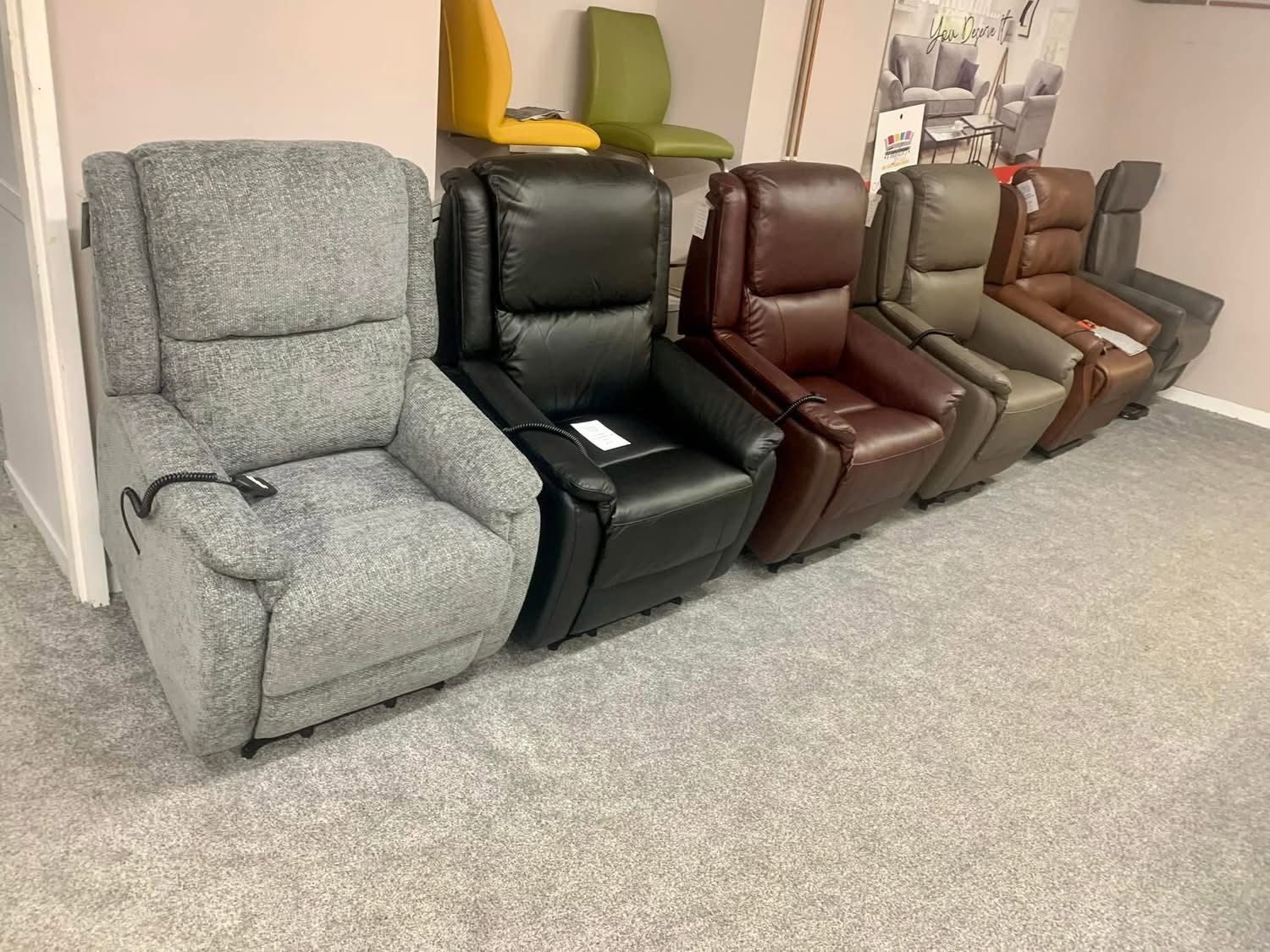
Mobility seating chosen by sitting in it
Riser recliner and mobility chairs are stocked at our Keith showroom, and they are the one product we would never recommend anyone buy unseen. A chair is fitted to a body: seat height against lower leg length, seat depth against thigh length, back height against shoulder height, and the lift action against how much help someone actually needs to reach standing.
Our service is to work through that in person, without pressure and without a sales script. We ask who the chair is for, how long they sit in it, how they currently get in and out, whether one person or two will be helping, whether they need to sleep in it occasionally, and where in the room it has to go and how much clearance the back needs from the wall.
It is for people who find standing from a low or soft armchair difficult or unsafe; anyone recovering from a hip or knee operation; people living with arthritis, a long-term condition or reduced strength; families worried about a relative struggling alone during the day; and carers who are currently taking the strain of every transfer by hand.
Professional help matters because the wrong chair is worse than no chair. A seat that is too high leaves feet dangling and cuts circulation behind the knee; too low and standing gets harder, not easier. Too deep and the person slides forward and loses back support. A lift action that is too abrupt is unsettling and unsafe. These are measurements, not preferences, and they are best sorted before delivery rather than after.
The cost of struggling on in the wrong chair
Every difficult stand from a low armchair is a fall risk, and a fall at home is the single event most likely to change an older person's independence permanently, often turning a manageable situation into a hospital admission and a much harder recovery.
Before that point, an unsuitable chair quietly shrinks someone's day. If getting up is hard, people get up less: fewer drinks, fewer trips to the kitchen, less movement, more stiffness, and a slow slide in confidence and strength that is much easier to prevent than to reverse.
The strain also transfers to whoever is helping. Family members and partners taking the weight of a transfer several times a day are one back injury away from being unable to help at all, and a chair that removes those lifts protects two people, not one.
Sitting all day in a chair with the wrong seat depth or no proper support adds its own problems: pressure at the tailbone and heels, swollen ankles from poor leg positioning, and back and neck pain from a headrest at the wrong height.
The mistakes we see most often
- Ordering a riser recliner online without anyone sitting in it, then discovering the seat height is wrong for the person's legs.
- Buying on motor count and features rather than on fit and lift action.
- Forgetting to check the clearance the chair needs behind it and in front of it before it reclines.
- Choosing a fabric that is hard to keep clean when the chair is used all day, every day.
- Assuming a standard armchair with a cushion added will do the same job.
Our process
How a mobility chairs job runs, step by step
- Step 1
Understand the need
Who the chair is for, what they struggle with, any conditions or recent surgery, how long they sit, and whether anyone helps them stand.
- Step 2
Measure the person
Lower leg length for seat height, thigh length for seat depth, and shoulder and head height for back and headrest support, the measurements that decide whether a chair works.
- Step 3
Try the chairs
Sit in the shortlist in the Keith showroom, operate the rise and recline yourself, and feel the difference between actions before choosing.
- Step 4
Check the room
Where the chair will live, clearance from the wall behind, room to recline in front, and access to a socket, confirmed before ordering.
- Step 5
Delivery and setup
Delivered, placed in position, plugged in and demonstrated properly, with the person shown how to use the handset themselves.
- Step 6
Ongoing support
You are dealing with a local family firm, not a call centre. If something needs adjusting or a question comes up later, phone 07377 368826 and speak to us.
What you get
The difference it makes day to day
Standing safely, without a helping hand
A correctly specified rise action brings the user gently to their feet, removing the most common fall moment in the day.
Comfortable for hours, not minutes
Right seat depth, right back height and proper leg support prevent the sliding, pressure and swelling that come from sitting in the wrong chair all day.
Independence kept at home
Being able to get up unaided means drinks, doorbells and daily routines stay in the person's own control.
Protection for carers
Every transfer the chair handles is one a family member or partner does not have to lift by hand.
Fit confirmed before purchase
Measured against the person and tried in the showroom, so the chair that arrives is the one that suits.
Spread the cost
Interest-free credit is available on selected furniture and flooring purchases, with 12 months' interest-free credit on full home furnishing projects. Terms and conditions apply and credit is subject to status.
Riser recliners and mobility seating in detail
The differences between chairs are mechanical and dimensional. This is what to look at.
Single motor and dual motor actions
A single motor chair moves the footrest and backrest together in one sequence and rises to standing on the same motor, simple to operate with one button, and often the right answer where straightforward operation matters most.
A dual motor chair drives the backrest and footrest independently, so the user can raise their legs without reclining the back, or recline much further towards a flat position. That independence matters for anyone advised to elevate their legs, or who dozes in the chair during the day.
Seat height, depth and back support
Seat height should let the feet rest flat with the knees at roughly a right angle. Too high and the front edge presses behind the knee; too low and rising becomes much harder even with a motor.
Seat depth should support the thighs while leaving a small gap behind the knee. Too deep and the user slides forward and loses all lumbar support, the most common cause of back pain in an otherwise good chair.
Back styles differ: waterfall backs with separate cushions suit those who like adjustability, button backs give firmer defined lumbar support, and lateral head wings matter for anyone who dozes and needs their head supported.
Fabrics, cleaning and daily use
A chair used all day needs a covering that copes with that. Easy-clean fabrics and wipeable finishes are worth specifying where spills are likely; softer upholstery suits lighter use.
It is also worth considering how the covering feels against the skin for someone sitting in it for long periods, and how easily it can be cleaned without removing the chair from the room.
Room layout, clearance and power
Riser recliners need clearance behind for the backrest and clearance in front for the footrest. Wall-hugging designs slide forward as they recline and need much less space behind, which can be the deciding factor in a small lounge.
The chair needs mains power, so we check socket position at the same time. Getting all this confirmed before ordering avoids the chair arriving and not fitting where it is needed.
Choosing for a relative who is not with you
Plenty of our mobility chair conversations start with a son or daughter who lives elsewhere and is worried. Bring the measurements, lower leg length from floor to back of knee, thigh length, and the person's height and approximate weight, and we can narrow it down accurately.
Where possible, bring the person in. Ten minutes sitting in the chair answers questions that no measurement can.
Fitting the chair into the wider room
A mobility chair often replaces a much-loved armchair, and it should still look like it belongs in the living room. We can match it against the sofas at our Buckie showroom and the flooring at Keith, so the room reads as a whole rather than as a medical adaptation.
Where a home is being adapted more widely, a level floor without deep pile or raised thresholds makes moving around considerably safer, and we can plan seating and flooring together.
From our showrooms
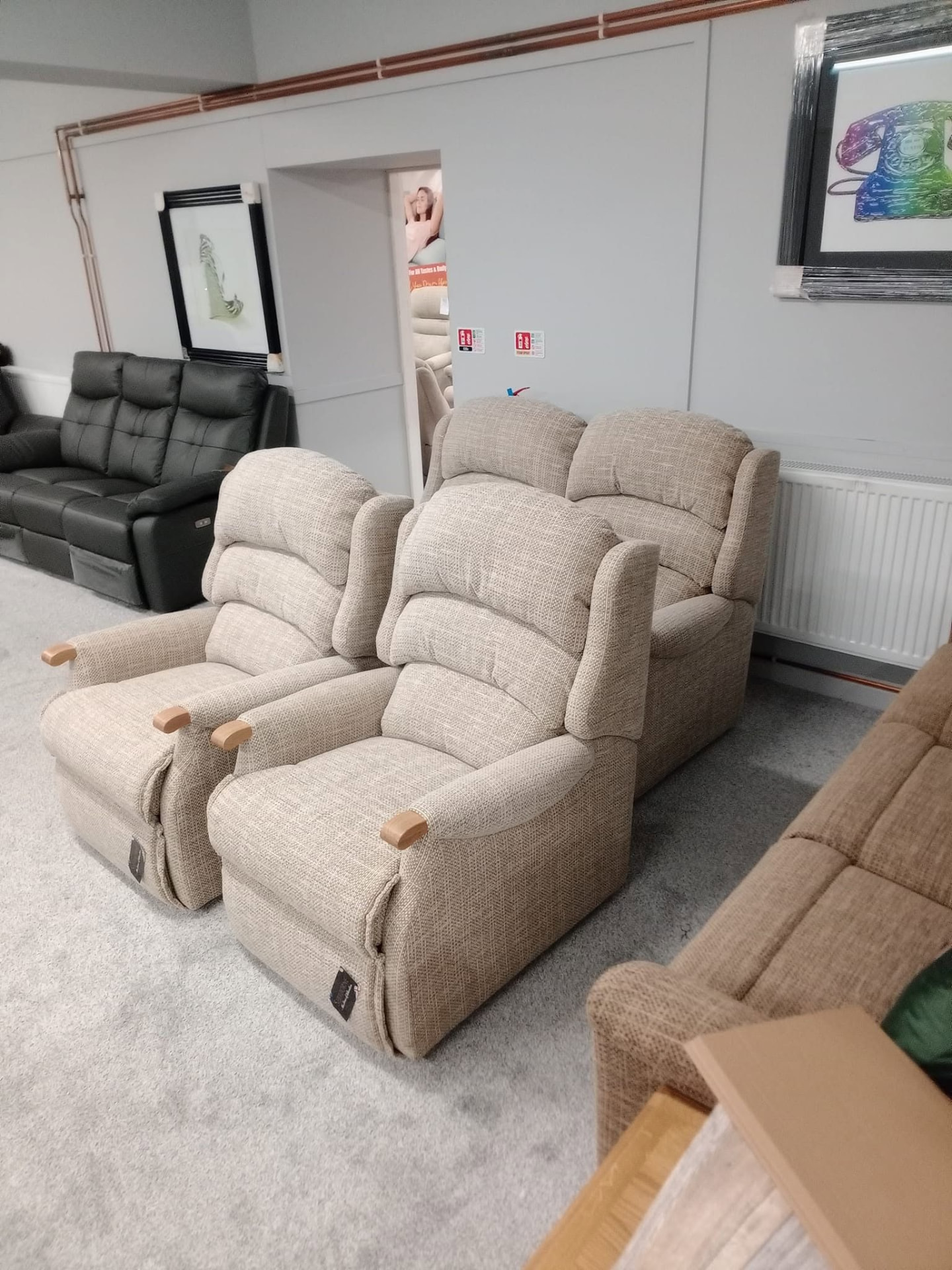
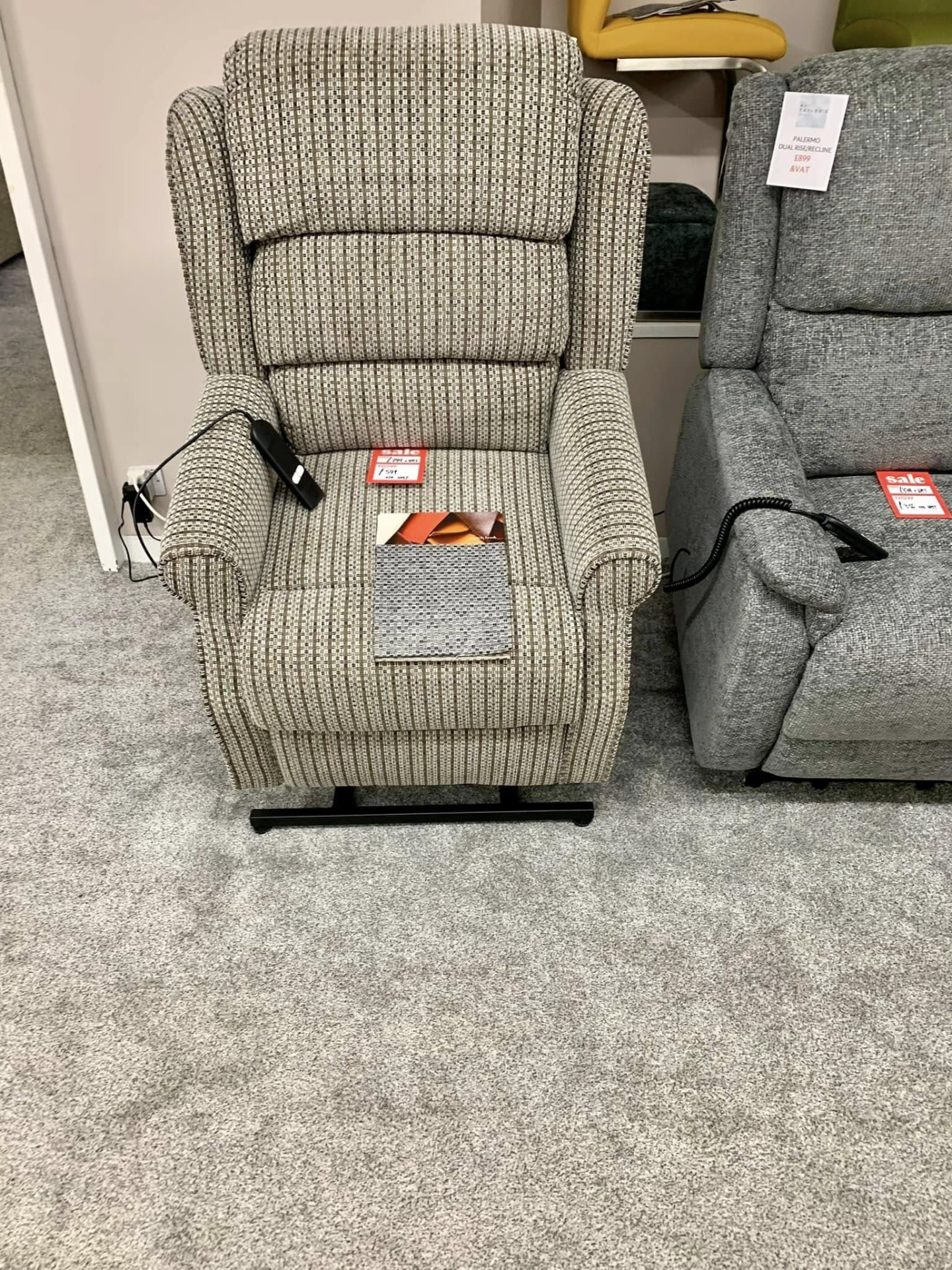
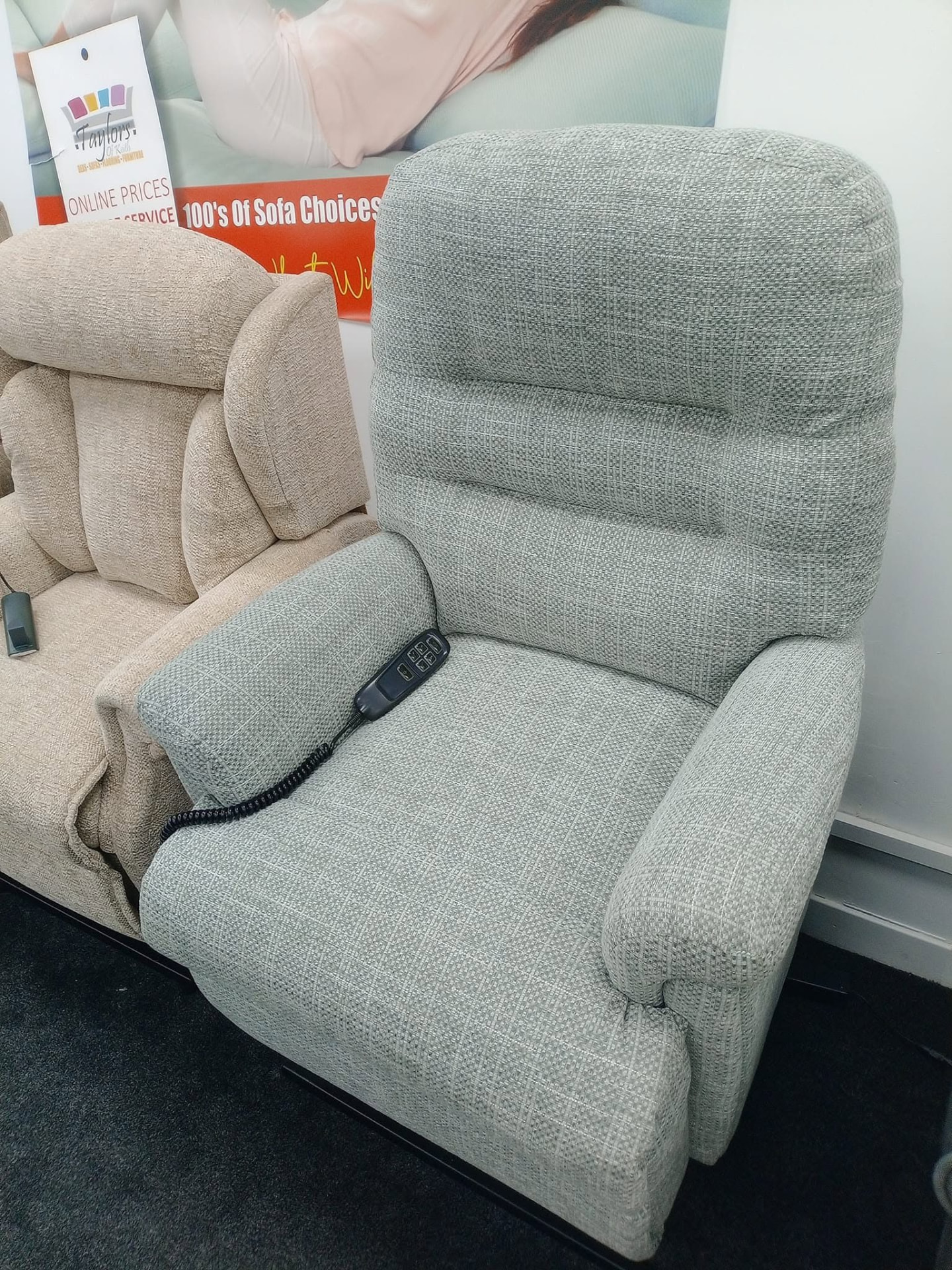
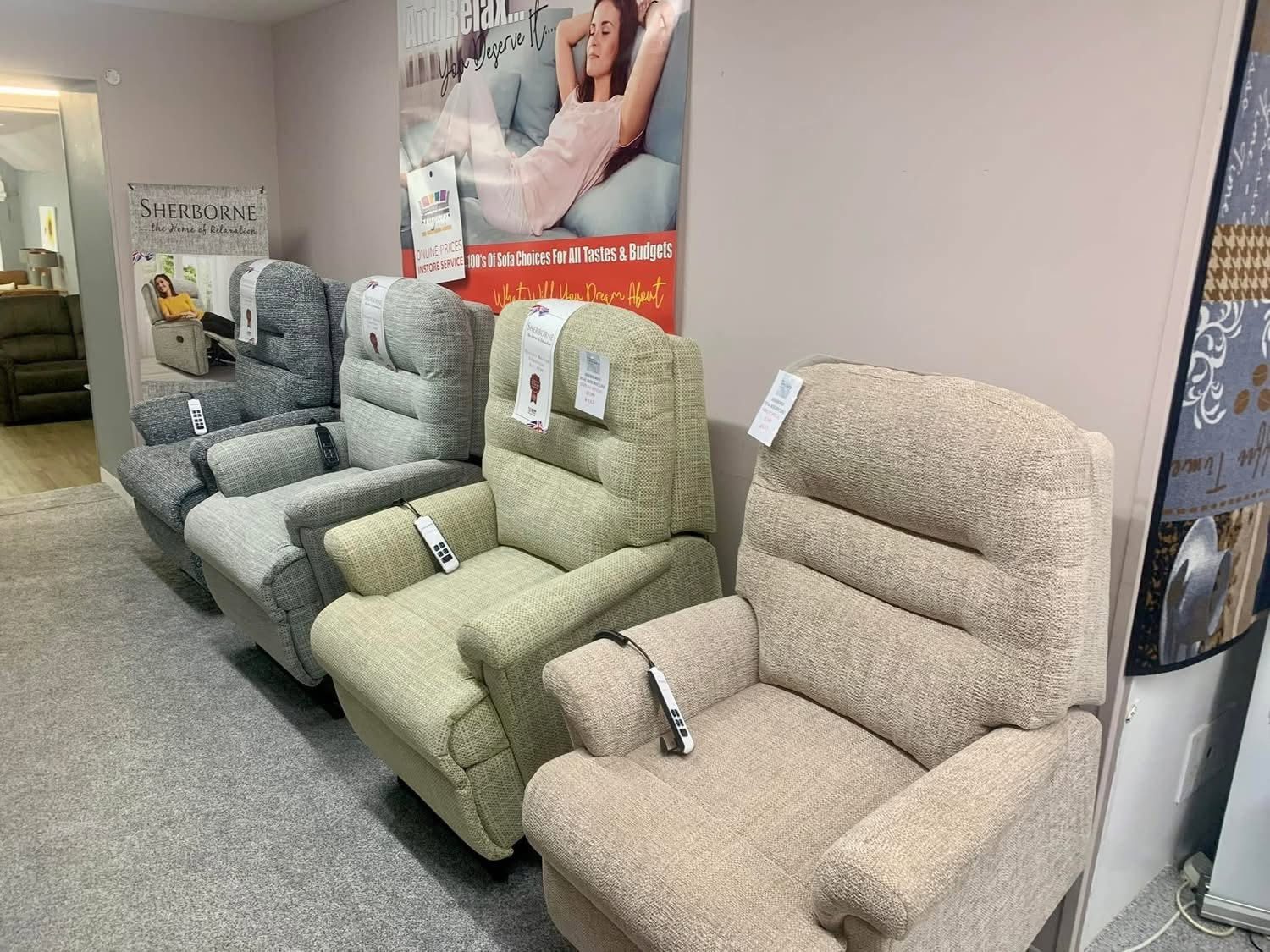
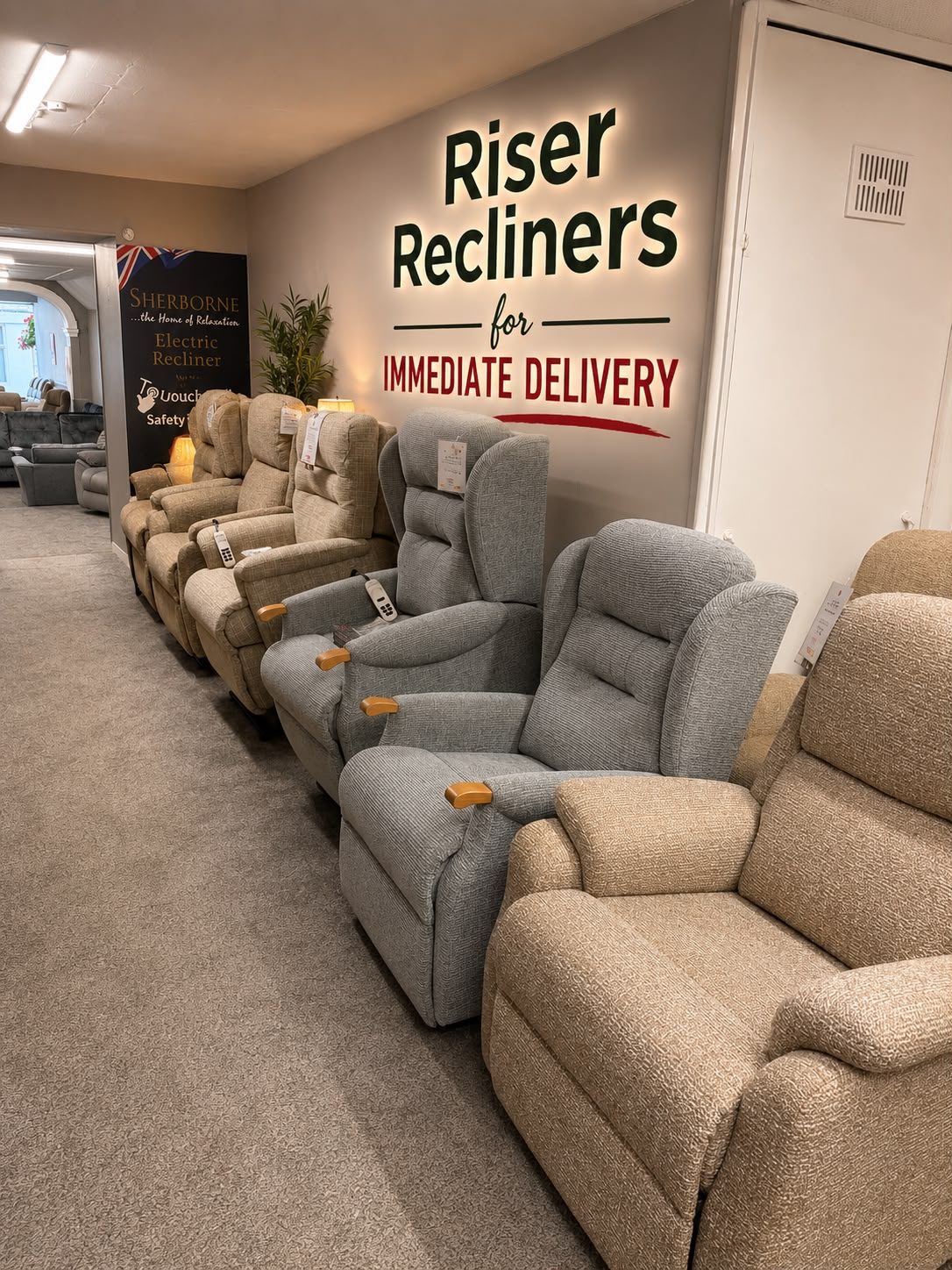
Mobility Chairs in stock and on display
Questions we get asked
Mobility Chairs, frequently asked questions
Related services
More from Taylor’s
Find the chair that fits the person
Bring the measurements, or better still bring the person, to our Keith showroom. We will take the time to get it right, there is no pressure and no script.
Family-run for 25 years · Keith & Buckie showrooms · Interest-free credit available (T&Cs apply, subject to status)